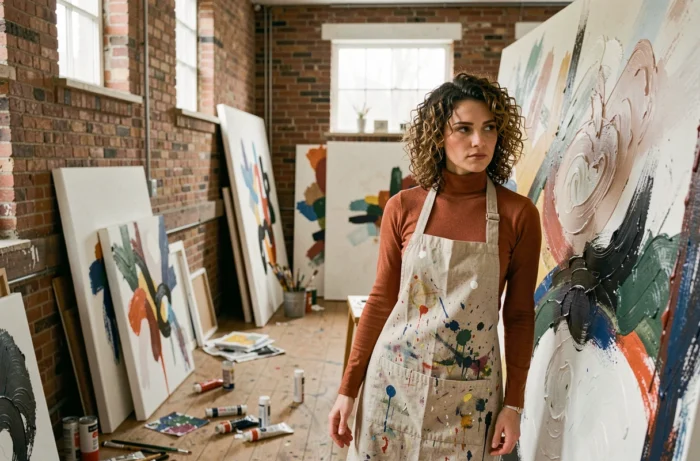
The contemporary art scene is defined less by a dominant style than by a series of shifts: shifts in mediums, distribution venues, and production methods. In recent years, three forces have been reconfiguring this landscape. Artificial intelligence is altering the chain of creation and sales. European cultural policies are attempting to frame these changes. The artistic practices themselves absorb these tensions to produce hybrid forms, where performance, video, and public space take as much place as canvas painting.
Auctions and AI: What Christie’s 2025 Sale Changed
In February 2025, Christie’s held a sale titled “Augmented Intelligence,” entirely dedicated to works created with the help of artificial intelligence tools. More than twenty lots exceeded initial estimates. The profile of buyers also shifted: a younger, digitally native collector audience represented a significant portion of the bidders.
This sale is not just a commercial event. It marks a milestone in the institutionalization of a medium that many galleries still treated as marginal. When an auction house of this caliber dedicates an entire catalog to art produced by algorithms, the signal sent to the contemporary art market is unambiguous.
Beyond creation, algorithms are now integrated into cultural mediation. Some institutions use AI to personalize visitor experiences or to facilitate provenance checks of artworks. Specialized publications, such as those featured on bigre-magazine.fr, follow these developments that redefine professional practices in museums and galleries.
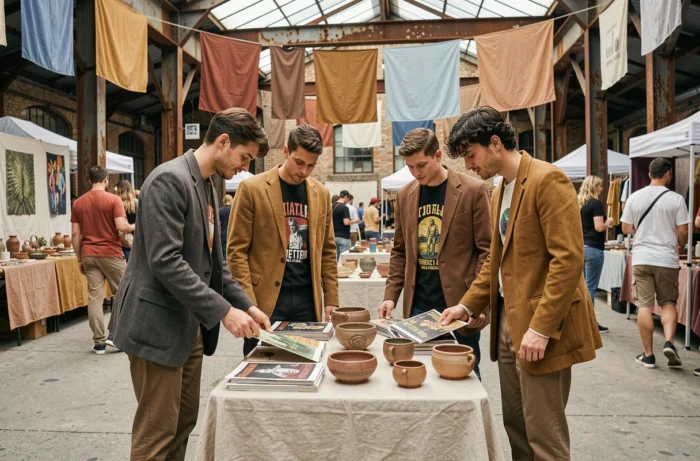
Digital Art and Performance: Artistic Forms Redefining Space
Video, immersive installation, and live performance are not new. What is changing is their place in the art economy. These forms now occupy international fairs on par with painting or sculpture.
Contemporary performance, in particular, relies on a simple principle: the artwork exists only in the time of its execution. It does not produce a sellable object in the traditional sense. This characteristic, long seen as a commercial obstacle, has become a programming argument for art centers and festivals.
Video and Contemporary Art: A Central Medium
Video art has carved out a particular space. Projected in galleries, streamed online, integrated into interactive devices, it circulates more easily than any other medium. Contemporary artists use it to document, tell stories, or simply create atmospheres that painting cannot convey.
The boundary between art video and mainstream audiovisual content is thinning. Some artists publish works directly on streaming platforms or social media, bypassing the gallery-museum circuit. The place of distribution is now part of the artistic proposal.
European Cultural Policy and Artist Protection in the Face of AI
The European Union has launched a framework called “Culture Compass for Europe,” which directly addresses the issue of AI in the cultural sector. Three axes structure this framework:
- The protection of artistic freedom as a non-negotiable principle, including against algorithmic pressures that favor certain formats at the expense of others
- Improving the remuneration and working conditions of creators, with a focus on the digital economy where the value produced by artists is often captured by platforms
- Regulating the use of AI so that it supports human creativity rather than replaces it, with mechanisms for fair remuneration in the digital economy
This framework remains programmatic. Its concrete translation will depend on national legislations and the ability of professional organizations to influence negotiations. Strengthened protection of intellectual property is among the most contested issues.
Diversity of Cultural Expressions in the Face of Algorithms
A less visible issue concerns cultural diversity itself. Recommendation algorithms, through their popularity logic, tend to concentrate public attention on a limited number of artists and forms. Experimental works, local artistic practices, or creations in minority languages risk losing visibility.
Several European institutions are working on heritage digitization strategies that incorporate this dimension. The underlying idea is: whoever digitizes first writes the history that AI will tell. Making diverse archival collections accessible allows for feeding models with a broader cultural material than just the overwhelmingly available English-language content online.
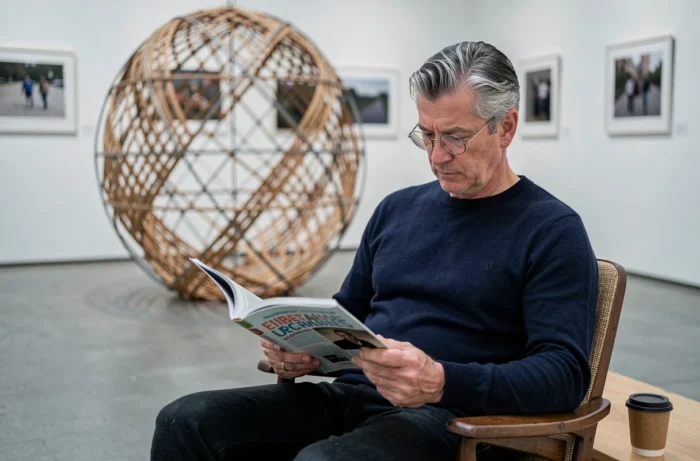
Contemporary Artists and the Physical World: The Return of Manual Skills
In the face of the rise of digital, part of the art scene is making a reverse movement. Ceramics, weaving, and engraving are experiencing a resurgence of interest that goes beyond mere nostalgia. These manual practices respond to a need for materiality that dematerialized art does not satisfy.
This return to craftsmanship does not oppose digital. It articulates with it. Artists combine 3D printing with manual finishes or use modeling software to design pieces that are then created in the studio. The hybridization between artisanal gesture and digital tool produces works that do not fall into traditional craftsmanship or algorithmic art.
The public is following this trend. Exhibitions that highlight the manufacturing process, technical gestures, and the slowness of execution attract increasing attendance in several European art centers. The finished work matters, but the creation process itself becomes an object of curiosity.
Current cultural trends do not outline a single direction. They overlay sometimes contradictory logics: automation and craftsmanship, dematerialization and a return to the tangible, algorithmic globalization and protection of local diversities. The contemporary scene reads less like a movement than as a field of productive tensions, where each technological advancement generates its artistic counter-proposal.