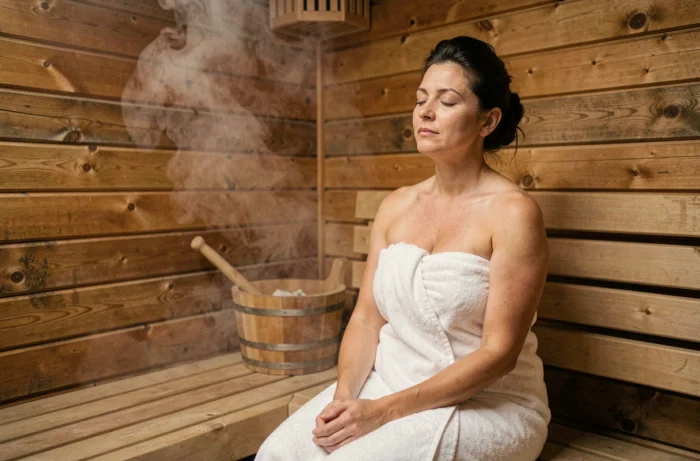
After a busy day, sitting for a few minutes in a warm cabin changes the texture of the evening. The body relaxes, the breathing slows down, and the subsequent sleep is often deeper. The spa sauna is not reserved for vacations or luxury centers: it fits into a daily wellness routine, provided you understand what really happens under the effect of heat.
Dry heat and cardiovascular response: what the sauna induces in the body
When the temperature in the cabin rises, the body reacts as it would during moderate physical exertion. The heart rate increases, blood vessels dilate, and blood circulation increases in peripheral tissues. This mechanism has a name: passive thermal stress.
Analyses from the Finnish KIHD cohort, followed for over twenty years, show that regular sauna use is associated with a reduction in cardiovascular mortality. The relationship is linked to the frequency of sessions rather than the intensity of the heat. People who practice several sessions per week have a more favorable cardiovascular profile than those who go only occasionally.
Specifically, a short sauna session engages the heart and blood vessels without impacting the joints. For someone who struggles to maintain regular physical activity, this is a complement worth exploring with wellness at Sauna Imelda as a starting point to discover different approaches.
Home spa sauna: technical constraints before relaxation

Installing a sauna or spa space at home is not just about choosing a model. Several technical parameters determine the quality of the experience and the safety of the installation.
Have you noticed that some sauna cabins display very different power ratings for similar volumes? The reason lies in the insulation of the room and the type of heating. A poorly insulated cabin consumes more without reaching the right temperature. The type of wood used (alder, aspen, spruce) also plays a role in thermal regulation and the absence of burning resin on contact with the skin.
Here are the points to check before any installation:
- The ventilation of the room: a sauna needs a fresh air intake from the bottom and an exhaust from the top for heat to circulate properly and the air to remain breathable.
- The electrical supply: home sauna stoves often require a dedicated connection, sometimes three-phase for models above a certain power.
- The waterproofing of the floor: in the case of a spa with a bath or a hammam, the covering must withstand permanent humidity without infiltration into adjacent rooms.
- The regulatory distance between the stove and the wooden walls, which varies by manufacturer but is always mentioned in the technical manual.
Neglecting any of these parameters turns a relaxation space into a source of problems (overheating, mold, excessive electricity consumption).
Sauna ritual and recovery: building an effective session
The way you structure your session radically changes its effects. Sitting in the heat for forty minutes straight does not provide more benefits than a well-conducted short session. On the contrary, sessions of ten to twenty minutes followed by a gradual cooling constitute the most studied protocol.
The classic thermal cycle is divided into three phases: heat, cold, rest. The hot phase dilates the blood vessels. The transition to cold (cool shower, cold swimming pool, or simply outside air) contracts them. The subsequent rest allows the nervous system to switch to a parasympathetic state, that of recovery.
Why two cycles instead of one? Because the body adapts to the first heat exposure. The second cycle provokes a more pronounced response, with deeper vasodilation and better muscle relaxation. Most Nordic protocols recommend at least two complete cycles per visit.
Hydration and precautions during the session
Perspiration in a sauna is abundant. Drinking water before and after each thermal cycle is not optional. Recent recommendations emphasize a point often overlooked: alcohol is strictly discouraged before and during the session, as it exacerbates dehydration and disrupts the regulation of body temperature.
Publications from 2026 on the subject recommend treating the integration of the sauna into daily life as a new exercise program. This means having a prior discussion with a doctor in case of cardiovascular pathology, starting with short sessions, and increased vigilance in case of diuretic or antihypertensive use.
Sauna, hammam, or spa bath: choosing according to your wellness goal
These three options share the principle of heat applied to the body, but their effects differ.
- The traditional sauna uses dry heat at high temperature. It engages the cardiovascular system and promotes intense sweating. It is the suitable choice for muscle recovery and improving blood circulation.
- The hammam operates with humid heat at a lower temperature. The ambient humidity hydrates the respiratory tract and softens the skin. It is better suited for people sensitive to dry heat.
- The spa with hot bath or swimming pool combines the effect of warm water and buoyancy, relieving the joints. The addition of massage jets targets specific muscle areas.
The choice depends on what you are looking to address: muscle tension, sleep quality, stress management, or skin maintenance. Each equipment meets a different need, and combining them in the same space multiplies the possibilities.
Integrating the spa sauna into your wellness routine does not necessarily require a monumental investment or a large dedicated space. What matters is the regularity of the sessions and adherence to the heat-cold-rest cycle. The body quickly learns to recognize this signal of relaxation, and the effects on sleep, recovery, and quality of life strengthen over the weeks.