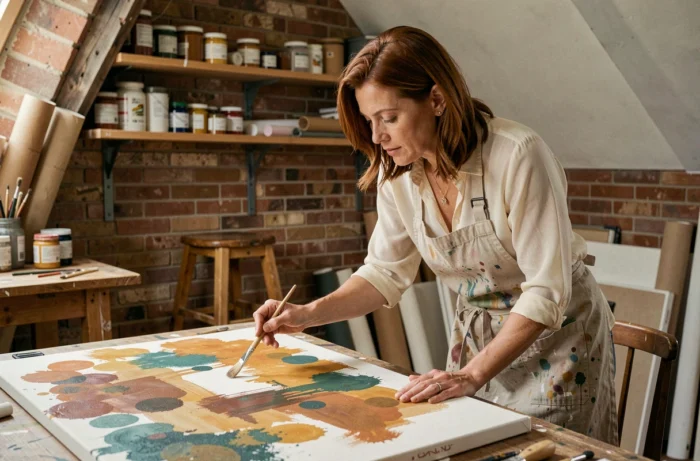
A rainy Saturday, no desire to go out, and the screen starts to strain the eyes. We’re looking for an activity that occupies the hands without requiring a degree in fine arts. Creative hobbies meet this need perfectly: they provide a clear break from the daily routine and reignite the imagination, even when we think we don’t have any.
Hands-on creative hobbies: choose based on available space and materials
Before diving into embroidery or modeling, we check what we have on hand. A corner of the kitchen table is sufficient for most textile activities. Ceramics or linocut, on the other hand, require a dedicated workspace and a minimum of tools.
The starting budget influences the commitment. A punch needle kit costs a few dozen euros and allows for a visible result in two hours. An entry-level pottery wheel represents a more significant investment, and feedback varies on the quality of models accessible to beginners.
To explore different options before equipping oneself, one can consult the website grainesdeblogueuses.fr dedicated to hobbies which lists ideas categorized by type of activity. The idea is to test small before filling a cupboard with unused supplies.
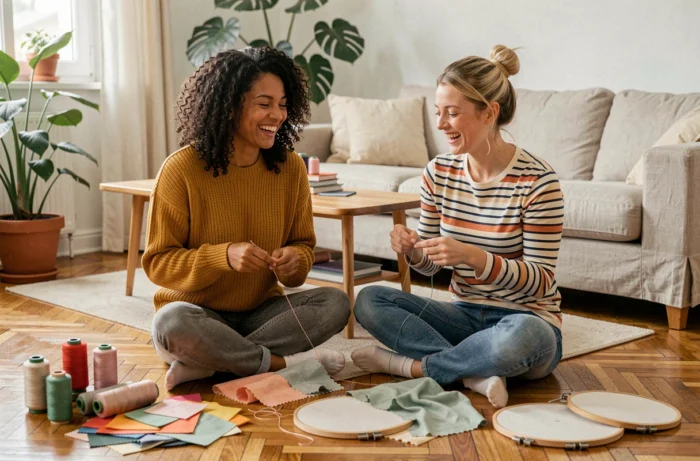
- Textiles (embroidery, knitting, punch needle): minimal clutter, portable, suitable for public transport or waiting rooms.
- Paper (origami, scrapbooking, papier mâché): inexpensive material, perfect for involving children without fearing mess.
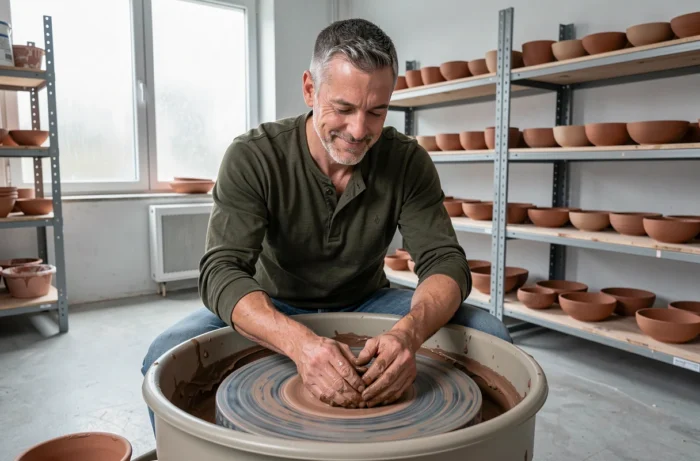
- Modeling (air-dry clay, polymer clay): rewarding three-dimensional result, but requires drying space and a minimum of cleanup.
3D puzzles and wooden models: creativity through assembly
Wooden models and mechanical puzzles hold a special place in creative hobbies. We don’t draw, we don’t paint (not right away), but we build a functional object piece by piece: a wall clock, a music box, a miniature vehicle.
Assembly develops concentration as much as fine motor skills. Manufacturers like Robotime or Ugears offer kits graded by difficulty level. A simple model can be completed in one evening, while an advanced model may take several weekends.
This type of activity is particularly suitable for those put off by drawing or painting. The framework is structured: we follow a plan, fit pre-cut pieces together, and the final result is guaranteed if we follow the steps. The creative part comes later when we decide to paint, varnish, or personalize the finished object.
Involving children without supervising every move
Wooden puzzles designed for younger children use larger pieces and simplified mechanisms. One can let an eight-year-old assemble a small automaton alone after showing them the first two steps. The risk of breakage remains low compared to ceramics or canvas painting.
Collective creative workshops: the group effect on consistency
We often start a creative hobby alone at home, then give up after three weeks. Attendance at artisan workshops in France has surged by 47% over the last three years, a sign that the collective format meets a real need for consistency and social connection.
A weekly workshop imposes a fixed appointment. We progress because we return, not because we are talented. The technical level rises without us realizing it, driven by the group’s motivation and direct advice from a facilitator.
Art therapy and public health programs
Collective artistic practices go beyond mere pastime. Recent syntheses published on visual artistic interventions show measurable effects on anxiety and emotional regulation, even if these effects remain moderate. Some public health initiatives now incorporate art in the form of structured programs, with a positive return on investment linked to reduced consultations and avoidable hospitalizations.
We are not talking about healing through macramé, but about a complement recognized by research. For individuals in situations of chronic stress or isolation, a group painting or pottery workshop offers a framework that is both creative and therapeutic.
Digital creative activities: drawing on tablet and 3D design
Creative hobbies are not limited to handmade crafts. Digital drawing on a graphics tablet allows for producing illustrations without purchasing paint, canvas, or brushes. Free software like Krita or MediBang offers features that are more than sufficient for beginners.
3D design, on the other hand, opens the door to creating objects via 3D printing. One can model a flower pot, a phone stand, or a figurine, then print it at home or through an online service. The loop between design and physical object closes in just a few hours.
Finding your niche between analog and digital
Many creatives mix both approaches. One sketches with a pencil, scans, and then works on a tablet. Or the opposite: one models in 3D, then hand paints the printed result. The boundary between manual and digital hobbies is blurring, and that’s a good thing. Each tool compensates for the limitations of the other.
- Entry-level graphics tablet: accessible, compatible with free software, gentle learning curve.
- 3D modeling software (Blender, TinkerCAD): free, abundant tutorials in French, active community.
- 3D printing at home: filament printers have significantly decreased in price in recent years, making home prototyping realistic.
The choice of a creative hobby depends less on presumed talent than on practical constraints: available space, budget, desire for solitude or group activity. Testing two or three different formats over a month provides a much more reliable idea than any list of recommendations. The goal remains simple: to find the activity that makes you lose track of time.