Chips remain a fatty and salty product, regardless of the packaging. Choosing the healthiest chips for a snack comes down to comparing fine nutritional differences between products that share the same base: a fried or cooked starchy food, seasoned with salt and sometimes additives. The difference lies in three measurable parameters: the type of oil, the salt content, and the ingredient list.
Quality of frying oil: the criterion that labels often obscure
Most chip bags mention “vegetable oil” without specifying which one. This lack of precision is not trivial. A chip fried in standard sunflower oil has a less favorable lipid profile than a chip fried in high oleic sunflower oil or canola oil, which are richer in monounsaturated fatty acids.
When the label simply states “vegetable oils,” the likelihood of a blend of more processed or less nutritionally interesting oils increases. Nutritionists recommend prioritizing brands that explicitly name the oil used. A bag that states “high oleic sunflower oil” provides usable information. A bag that remains vague on this point invites distrust.
This criterion often takes a back seat to the Nutri-Score, even though it directly affects the quality of fats consumed. Two chips rated C on the Nutri-Score can have very different lipid profiles depending on the oil used. Knowing which chips are the healthiest therefore requires looking beyond the overall score to examine the detailed composition of fats.

Legume chips and Nutri-Score: a gap less clear than it seems
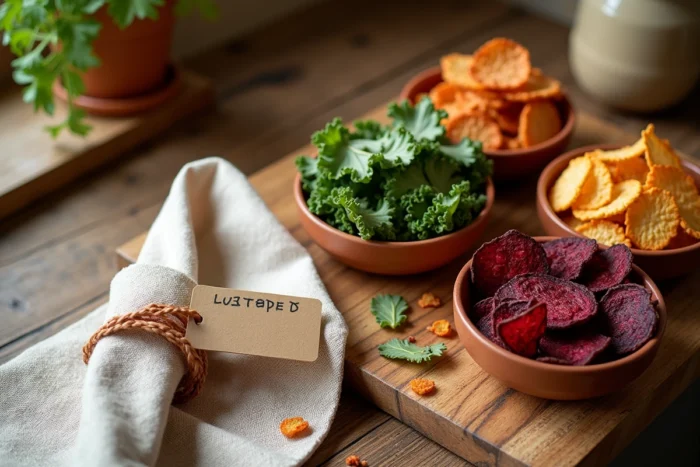
Chips made from lentils, chickpeas, or other legumes are increasingly occupying shelf space in supermarkets. Their “healthy” image is based on two arguments: a better Nutri-Score and a plant-based foundation rich in protein. Both deserve to be nuanced.
Some legume chip brands do indeed display a Nutri-Score of B, while a classic potato chip hovers around C. The gap exists, but it does not turn the product into a health food. The caloric density remains comparable, and several brands compensate for a milder taste with added salt that can reach levels higher than those of traditional chips.
Recent comparative data shows that some alternative chips contain up to three times more salt than classic chips. The Nutri-Score, which weighs several criteria, may not reflect this excess sodium if other parameters (fiber, protein) pull the score upward.
Fiber and protein: a real advantage under conditions
Lentil or chickpea chips provide more fiber and protein than potato chips. This contribution improves satiety and can limit the amount consumed during a snack. The advantage is real, provided that salt and fats are kept in check.
Dietitians recommend considering these products as chips in their own right, not as a substitute for cooked legumes. A bowl of cooked lentils and a handful of lentil chips have nothing in common nutritionally.
Salt and additives: reading the ingredient list beyond the Nutri-Score
Salt is the most discriminating marker between two bags of chips. Its impact on cardiovascular health is documented, and the differences between references are wide. A plain chip from one brand may contain significantly less salt than a “flavored” chip from another brand, regardless of their respective Nutri-Scores.
The survey by 60 Millions de consommateurs highlighted that the salt content varies greatly from one reference to another, even within the same range. Comparing labels on this specific point remains more reliable than relying on a synthetic score.
As for additives, classic plain chips generally contain few: potato, oil, salt. Flavored ranges add flavor enhancers, aromas, and sometimes colorings. Legume chips, despite their more natural image, often incorporate more additives to compensate for a different texture or taste.
- Check the exact nature of the oil (high oleic sunflower, canola) rather than the generic mention “vegetable oils”
- Compare the salt in grams per 100 g between two references, even if their Nutri-Score is identical
- Prefer short ingredient lists, a sign of a less processed product
- Do not equate “legume chips” with “healthy food” without checking salt and additives
Baking and portion control: two concrete levers for snacking
Baked chips contain less fat than fried chips, as the cooking process reduces oil absorption. The difference in total fats is tangible. However, the salt and additive content does not depend on the cooking method: a baked chip can be just as salty as a fried chip.
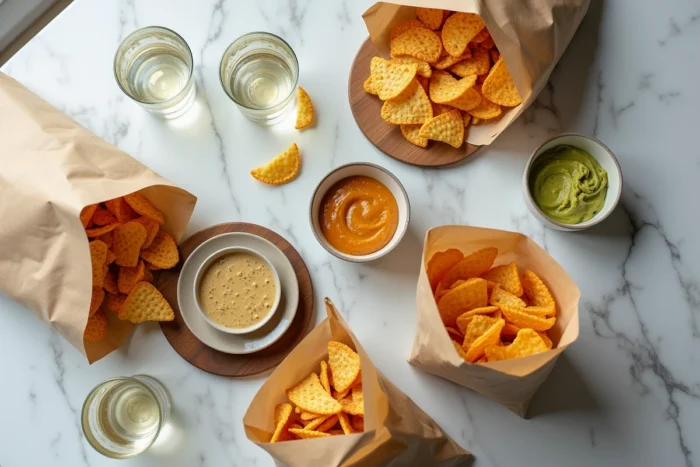
Portion control remains the most effective lever to limit the impact of a chip snack. A handful of about 30 grams, regardless of the type of chip, represents a moderate caloric and sodium intake. The rarely addressed issue is the format: a large bag opened on a snack table encourages mechanical consumption well beyond this amount.
Opting for individual bags or pouring a defined amount into a bowl allows for better control over what is consumed. This simple gesture has more impact on health than changing brands with an equivalent nutritional profile.
Choosing healthier chips boils down to three reflexes: read the oil, compare the salt, limit the portion. The Nutri-Score helps with an initial sorting, but it does not exempt you from turning the bag over.