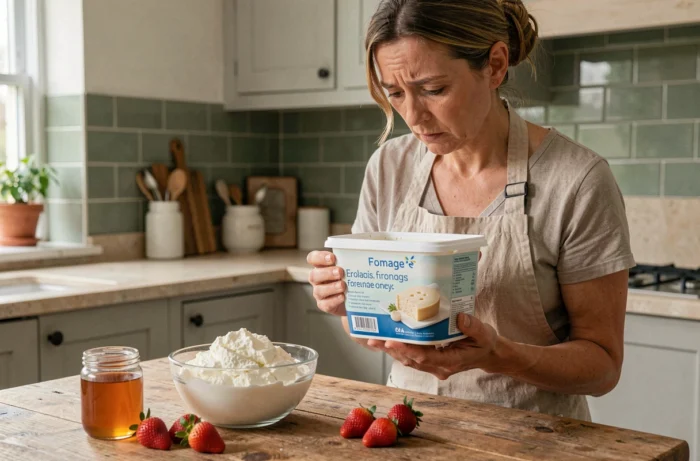
White cheese is among the most common dairy products found in French refrigerators. Rich in calcium and protein, it is often recommended in the diets of both children and adults. However, its production and storage expose consumers to health risks that most underestimate.
Bacterial contamination of white cheese: a risk that goes beyond isolated batches
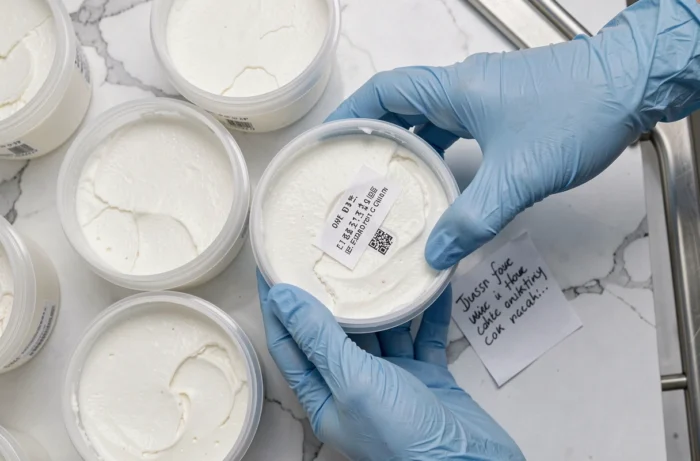
Have you ever seen a recall alert for white cheese sold in supermarkets? These notifications are more frequent than one might think. The bacterium Listeria monocytogenes is one of the main causes of white cheese recalls.
The Ministry of Agriculture has identified 21 cases of listeriosis linked to similar strains, 18 of which have occurred since the beginning of summer 2025. This figure shows that the problem is not limited to a one-time incident involving a single batch.
One rarely addressed point deserves your attention: preventive recalls can involve batches produced on the same day as a batch that tested positive. In practical terms, even if your container of white cheese does not bear the reported batch number, it may have been produced under the same conditions. The official Rappel Conso notices explicitly mention this risk of cross-contamination between batches produced simultaneously.
An article detailing the dangers of white cheese on Carnet Santé Bpco discusses the mechanisms by which these bacteria develop in fresh dairy products.
Listeriosis after consuming white cheese: symptoms and incubation period
Listeriosis does not always manifest quickly. This is what makes it particularly deceptive. The incubation period can last up to eight weeks after ingestion of the contaminated product.
During this time, establishing a link between symptoms and the white cheese consumed weeks earlier becomes very difficult. A mild fever, headaches, or body aches may be attributed to the flu or fatigue.
Populations most exposed to complications
Not everyone reacts the same way to Listeria. The consequences vary significantly depending on the immune status.
- Pregnant women risk an infection that could affect the baby’s development, with possible complications for pregnancy and delivery.
- Older adults have a less responsive immune system, allowing the bacteria more time to develop.
- Immunocompromised individuals (heavy treatment, chronic illness) may develop severe forms, including meningitis or septicemia.
For a young child, consuming contaminated white cheese can lead to severe digestive disorders. Caution is advised when choosing dairy products included in a baby’s diet.
Raw or pasteurized milk white cheese: the distinction changes the level of risk
The bacterial risk is often associated with raw milk cheeses. Pasteurization, which involves heating milk to destroy pathogens, is supposed to provide additional safety. In reality, pasteurized milk white cheeses are also subject to recalls.
Contamination can occur after pasteurization, during packaging or storage. Poorly cleaned equipment, a break in the cold chain during transport: there are many points of vulnerability between the factory and your refrigerator.
What the label “pasteurized” does not guarantee
Pasteurization destroys the bacteria present in the milk at the time of thermal treatment. It does not protect against subsequent recontamination. A poorly stored pasteurized white cheese after opening becomes a favorable environment for bacterial proliferation within hours at room temperature.
The expiration date is only reliable if the cold chain is maintained from start to finish. A container left out of the refrigerator for too long during shopping, for example, loses this guarantee even if the indicated date has not passed.

Concrete precautions to limit risks associated with white cheese
Reducing exposure to risks does not require giving up white cheese. A few simple reflexes are enough to significantly limit dangers.
- Always check the Rappel Conso platform before consuming a recently purchased fresh dairy product, especially if you belong to a vulnerable population.
- Store white cheese at a temperature below 4 °C and consume it quickly after opening, ideally within 48 hours.
- For the diet of a baby or young child, prioritize products with clearly indicated traceability on the packaging and whose cold chain has not been broken.
- If fever or body aches appear in the weeks following the consumption of a recalled product, consult a doctor mentioning the product in question.
Monitoring product recalls is as important as checking the expiration date. Alerts from the government platform cover both major retail chains and short supply circuits.
White cheese remains a nutritionally interesting food, rich in calcium and vitamin D according to formulations. Vigilance regarding its storage and health alerts allows one to enjoy its benefits without exposing oneself to avoidable risks. For pregnant women and young children, this attention should become a reflex with every purchase of fresh dairy products.