
Improving your home doesn’t always require a big budget or heavy renovations. A few targeted adjustments in storage, maintenance, or energy consumption can change your daily quality of life. Here are ten concrete, tested, and easy-to-implement tips to transform your interior without stress.
1. Seasonal Purge of Unused Items

Have you noticed that some closets are overflowing with items that no one has touched in a year? Seasonal decluttering involves emptying a piece of furniture or a room each season, separating what stays from what goes (donation, recycling, trash).
An item not used in the last twelve months is unlikely to be used again. By removing this surplus, you free up storage space without buying a single additional piece of furniture. The benefit is immediate: less visual clutter, less accumulated dust, and quicker cleaning.
If you’re looking for more practical ideas, home tips on Scoopzilla cover complementary topics on interior design and domestic organization.
2. Systematic Labeling of Cables and Storage

Tangled cables behind the television or desk create visual clutter and complicate any connection. Use colored tape or small sticky labels to mark each cable with the name of the corresponding device.
The same principle applies to storage boxes. A labeled container can be found in seconds. Apply this logic to kitchen bins, garage crates, or bathroom drawers. The time saved daily is real, especially when multiple people share the living space.
3. Quick Repair of Small Wall Damages
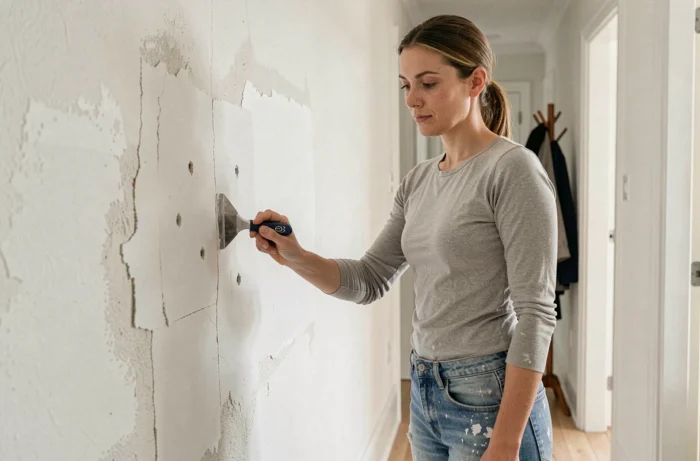
A screw hole, a fine crack, a paint chip: these micro-defects accumulate and give a neglected look to a room. A tube of filler and a spatula are enough to address them in less than ten minutes.
Apply the filler, smooth it out, let it dry, then apply a touch of local paint. Repairing a defect as soon as it appears prevents it from worsening. A cracked wall left untreated will eventually crumble further, complicating repairs and increasing costs.
4. Targeted Cleaning of Kitchen and Bathroom Grout

Blackened grout between tiles changes the appearance of an entire room. A mixture of baking soda and water, applied with an old toothbrush, restores whiteness in minutes.
This simple action, repeated once a month, prevents mold from settling in permanently. Clean grout gives the impression of a completely renovated room, without touching the tiles or furniture.
5. Replacing Bulbs with Energy-Efficient LEDs

Lighting represents a regular expense. Replacing traditional bulbs with LEDs significantly reduces electricity consumption while providing a much longer lifespan.
You can also install adhesive LEDs in dark areas (back of cabinets, under stairs, pantry). These small light sources run on batteries and stick without drilling. They enhance the usability of often-forgotten corners.
6. Ten-Minute Daily Cleaning Routine
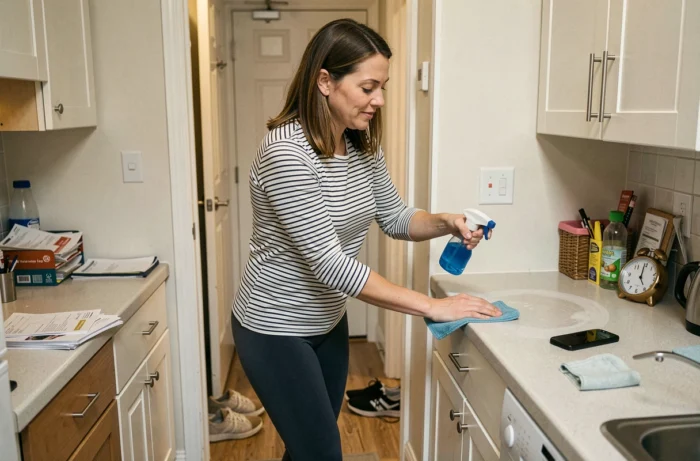
Spending ten minutes each evening on a quick clean prevents dirt from accumulating. The principle is simple: choose one specific task per day.
- Monday: dust the visible surfaces in the living room
- Tuesday: clean the kitchen countertop and sink
- Wednesday: sweep or vacuum the entrance
- Thursday: wipe mirrors and faucets in the bathroom
Ten daily minutes replace two hours of cleaning on the weekend. Consistency matters more than intensity.
7. Optimizing Vertical Storage in the Kitchen
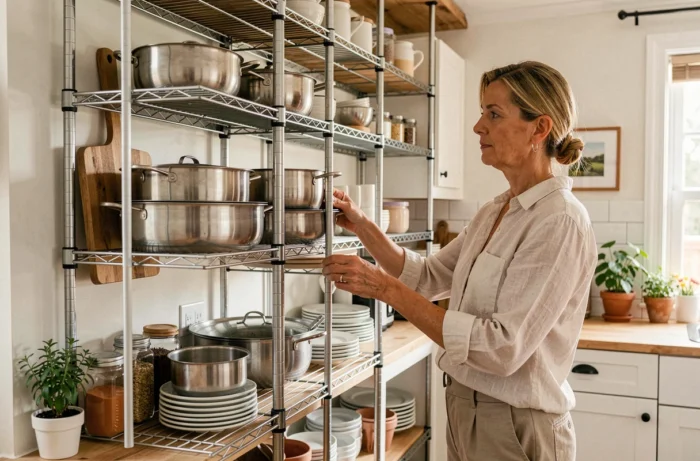
Cluttered countertops slow down meal preparation. Install magnetic strips for knives, hooks for utensils, and wall shelves for spices. Vertical storage frees up counter space without reducing the room’s area.
This type of setup is inexpensive and can be installed with a few screws. Each item has its visible place, which also speeds up cleanup after meals.
8. Window Insulation with Adhesive Seals

Drafts around windows increase heating bills and decrease thermal comfort. Adhesive foam or rubber seals, available at hardware stores, can be applied in minutes to the frame.
Sealing air leaks is the simplest and cheapest insulation gesture. Before considering heavy energy renovation work, check the condition of your existing seals. A worn seal lets in as much air as a small permanent opening.
9. Scheduling Energy-Consuming Appliances During Off-Peak Hours
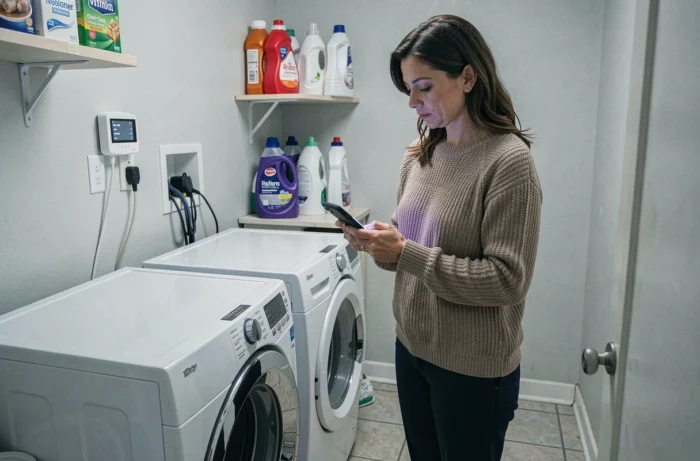
Washing machines, dryers, dishwashers: these appliances consume a lot of energy. If your electricity contract offers an off-peak option, schedule their start during these time slots (usually at night).
A simple mechanical timer on the outlet is sufficient if the appliance does not have a built-in delayed start function. The off-peak rate is significantly lower than the normal rate, reducing the bill without changing your washing habits.
10. Adopting White Vinegar as a Versatile Cleaning Product

Multiplying cleaning products clutters cabinets and burdens the budget. White vinegar replaces several of them:
- Descaler for faucets, kettles, and coffee makers
- Window cleaner mixed with warm water
- Natural deodorizer for drains
- Fabric softener as a replacement for traditional products
One inexpensive product covers the majority of everyday maintenance needs. Combined with baking soda for tougher stains, it forms an effective duo that simplifies under-sink storage and limits unnecessary purchases.
Each of these tips works independently of the others. Start with the one that addresses your main irritant, whether it’s clutter, energy bills, or maintenance. The most sustainable improvements in a home rarely come from a major renovation, but from a series of small actions maintained over time.