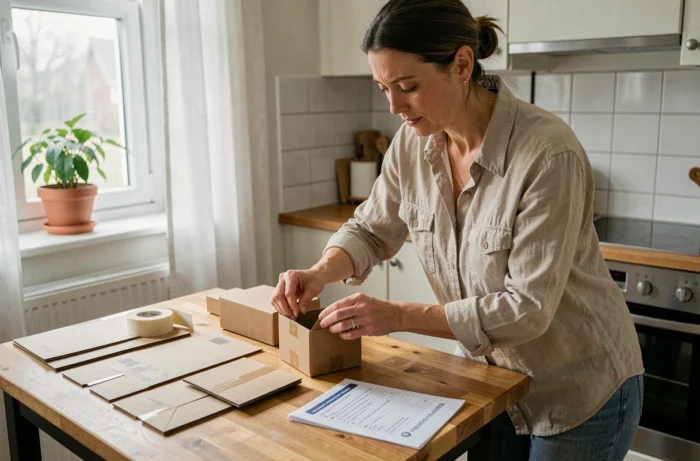
Several ads offer a few hundred euros per month to package products at home, with no diploma or experience required. Home packaging work regularly appears in searches for supplementary income. The reality of this sector deserves careful examination, as genuine opportunities are rare and traps are numerous.
Why machines have replaced manual packaging at home
Before seeking assignments, it is important to understand a technical point. Companies that ship regular volumes (mailing, envelope stuffing, sample packaging) have largely automated these tasks. A folding machine can handle in one hour what a person would do in an entire day.
This shift explains why manual packaging assignments have almost disappeared from the market. The few exceptions involve very small volumes, often seasonal: a soap maker preparing their holiday gift sets, a local e-commerce seller launching a new product in a limited series.
When considering working from home in packaging, this industrial reality changes the game. The job market is not where the ads claim it to be.
Anatomy of a starter kit scam
Have you ever noticed that some offers require payment even before you start? This is the most reliable signal of fraud. The scenario almost always unfolds in the same way.
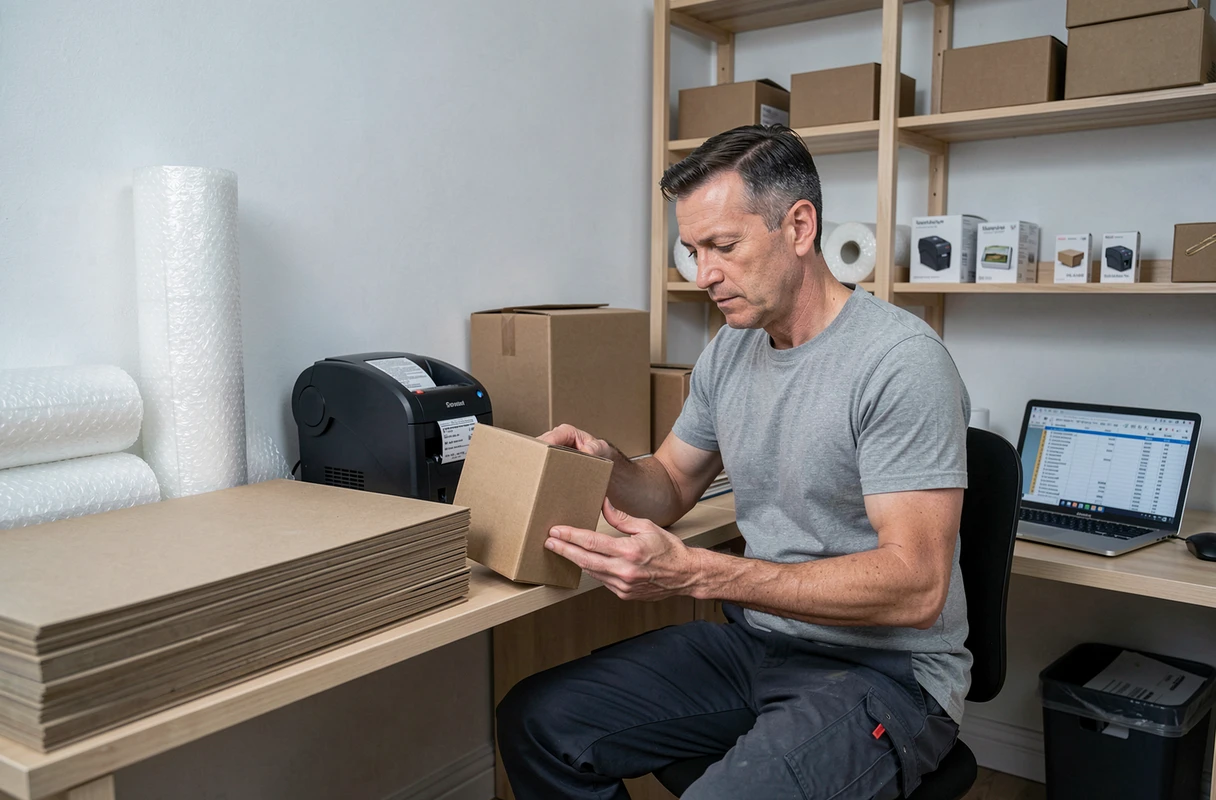
- The ad promises an attractive income for simple tasks (packaging samples, filling envelopes), with no diploma or experience required.
- After a reassuring initial exchange, you are asked to pay for a “starter kit,” processing fees, or mandatory training, sometimes a few dozen euros, sometimes more.
- Once the payment is made, the promised assignments never arrive, or the materials received have no real value. The contact disappears.
No legitimate assignment asks for money upfront. No processing fees, no purchase of materials, no prior paid training. A serious employer or client provides what is necessary and pays for the work done.
The absence of a written contract or a clear mention of the legal status (employee, independent contractor) is another warning sign. If no one explains under what regime you would be paid, the likelihood of a scam or undeclared work is very high.
Legal status and home packaging: what distinguishes a reliable offer
Why is status so crucial? Because it defines your rights, your social protection, and the legality of the activity itself.
In the case of salaried home employment, the company provides you with a work contract and a payslip. You benefit from the Labor Code, with an hourly wage at least equal to the minimum wage. This format exists, but it remains rare in manual packaging.
Most occasional assignments assume a status of already registered micro-entrepreneur. You invoice for your services, declare your income, and pay your contributions. If the ad mentions neither a contract nor invoicing, it falls into a gray area that often involves undeclared work.
Before accepting an assignment, check three elements: the legal existence of the company (consultable SIRET number), the exact nature of the contract or order, and the payment terms (after delivery of the work, never before).
Finding real packaging assignments: the channels that work
Online ads on major job platforms are the preferred hunting ground for scammers. Real assignments can be found elsewhere.

Direct outreach to local artisans and small e-commerce sellers remains the most reliable channel. A producer of artisanal cosmetics, a roaster selling online, a handmade jewelry brand: these profiles sometimes need occasional help with packaging, without going through dubious intermediaries.
Some concrete leads:
- Contact artisans present at local markets or creator shops. Offer your services directly, specifying your status and availability.
- Identify e-commerce sellers in your area through social media or trade chamber directories. Seasonal spikes in activity (holidays, sales) create occasional needs.
- Check job offers on the websites of logistics or mailing companies themselves, rather than on general aggregators where sorting is difficult.
Compensation will be modest and irregular. This type of activity is suitable as a supplementary income, not as a main job. Payment is usually made per piece, meaning that your speed of execution and the volume assigned directly determine what you earn.
Realistic income and limits of home packaging
Ads often mention flattering amounts. The reality is more sober. Piecework compensation for manual packaging represents a few cents per unit. Even with a good pace, the monthly income remains low and entirely depends on the volume of orders, which fluctuates.
Home packaging does not replace a stable salary. It can serve as a supplement if you have free time and find a reliable client. For those seeking a real income from home, other avenues offer more prospects: online sales with a micro-entrepreneur status, writing or translation services, or remote administrative assistance.
Home packaging work still exists on the margins, for artisanal volumes and occasional assignments. The challenge is not so much the work itself but the path to finding a genuine assignment without falling into traps. Checking the legal status of the offer, refusing any upfront payment, and prioritizing direct contact with local professionals: these three checks take a few minutes and prevent most disappointments.